
Our daughter graduated high school yesterday and is off to university in the fall. This milestone in her life has brought much reflection on my own. I remember so vividly the summer I graduated high school, the feeling of wanting to be on my own, free from my parents and definitely not appreciating them nearly enough, the trepidation of starting a new chapter of my life, of knowing I’d be meeting new characters: friends, schoolmates, teachers, lovers. It’s such a very exciting and yet nerve-wracking time, and I have complete faith that along with a few plot twists, she is about to write her own excellent, award-worthy book.
As the elder in the relationship reading all this (to extend the metaphor), it brings feelings of both the bitter and the sweet, of wanting to prepare her and my own nostalgia. But that’s life, isn’t it? Life is not fast-paced, formulaic genre fiction but rather more meandering, literary CanLit (Canadian Literature, the ones that tend to win prizes up here), mainly character-driven with a lot of boring parts and the occasional actual plot point.
There is a book I’ve been meaning to read by Susan Cain, called Bittersweet: How Sorrow and Longing Make Us Whole, and I think I will this summer. It is the feeling I try to capture in my novels because to me it is like trying to capture the ephemerality and the lack of neatness of real life. It is what lead me to rewrite the epilogue to The Virgins of Venice dozens of time to get the tone just right. (According to Goodreads’ Lists, The Virgins of Venice is the 52nd of 5000+ books in the “Best Endings” category – a high compliment indeed!)
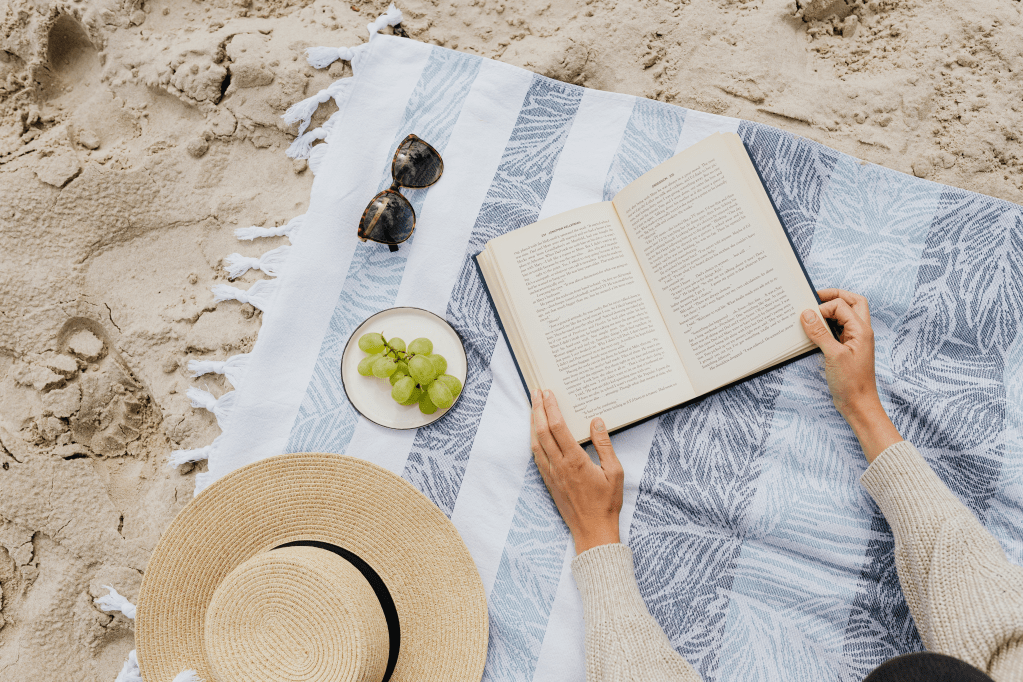
Some of my most favourite books have that bittersweet quality. I’ve read a few recently that I recommend for your own summer reading: People of the Book or really anything by Geraldine Brooks, The Marriage Portrait or Hamnet by Maggie O’Farrell, A Gentleman in Moscow by Amor Towles, and for me a rare nonfiction book of essays, Consider the Lobster (except the first essay on porn that I could not get through) by the late David Foster Wallace, whom I’ve never read but felt I finally should.
I snagged Consider the Lobster, which perfectly captured the 1990s and early 2000s, from a local Little Free Library on one of my daily rambles. Almost always I listen to podcasts on my walks, although after reading Stolen Focus: Why You Can’t Pay Attention and How to Think Deeply Again by Johann Hari, I am considering trying to walk in silence more, to let my thoughts flow. And yet flow they do anyway, and a third of the time I realize I haven’t even been listening to my favourite podcasts: The History of Literature, 3 Books, BBC: In Our Time, The Rest is History, Our Fake History, and Gender: A Wider Lens – all highly recommended if you’re looking for where to start and love history and literature.
And so this summer I will read, and listen, and walk, and let my thoughts flow, and pick up books in the local Little Free Libraries, and plot my next novel striving to bring another woman’s lost story to life, and think about my mother and my own late teens and early 20s, and embrace all the bittersweetness.
And I will cheer on my daughter as she packs up her own little library of favourite books from her childhood and her bookbinding materials (she is a maker of books too) and her special pens and her new laptop and she writes her own life.
Image: Pixabay and Karolina Grabowska, Pexels

 Gina Buonaguro